Community Colleges
Many community colleges around the country have opened their doors to homeschooled teenagers, giving them an opportunity to start their college careers early, to gain classroom experience and college credit, to challenge them with more difficult materials, and to expand their horizons. Many parents look to community colleges to provide instruction in materials that they are not well suited to teach themselves.
Links
American Association of Community Colleges (AACC)
Founded in 1920, the American Association of Community Colleges (AACC) has, over four decades, become the leading proponent and the national “voice for community colleges.” Today, AACC’s membership represents close to 95 percent of all accredited U.S. two-year community, junior and technical colleges and their 10.5 million students, as well as a growing number of international members in Puerto Rico, Japan, Great Britain, Korea, and the United Arab Emirates. The colleges are the largest and fastest-growing sector of U.S. higher education, enrolling close to half (45 percent) of all U.S. undergraduates. AACC supports and promotes its member colleges through policy initiatives, innovative programs, research and information and strategic outreach to business and industry and the national news media.

And What About College?: How Homeschooling Can Lead to Admissions to the Best Colleges & Universities
Get all your questions about helping your homeschooled student apply and get accepted to college answered with this resource. It discusses transcripts, diplomas, education choices, online colleges, and more. If you are worried about whether your homeschooled student can have a successful college search, then this book will help allay those fears and offers good support and information.
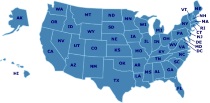
Looking for Another State?
Featured Resources
As an Amazon Associate, we earn from qualifying purchases. We get commissions for purchases made through links on this site.

Habits: The Mother's Secret to Success (Charlotte Mason Topics - Volume 1)
This work contains a selection of the writings of Charlotte Mason, a British educator. Her writings from the 1880s are still relevant today and contain ideas that can be easily and successfully incorporated into homeschooling. This book focuses on the concept of building good habits in children, why it is important, how it can be implemented, and what impact it will make on home life and homeschooling. Written from a mother's point of view, Mason's works and ideas are explained and distilled int...

Why We Homeschool
It is a common misconception that most parents homeschool due to bullies, school shootings, or bad teaching content. While these things are important, there is a higher purpose for choosing to home education your children. Even if all those things were corrected, there are stronger reasons to stay committed to the homeschool model. So why do you homeschool? This book looks at the meaning and significance of a true Christian education.

The Well-Ordered Home: Organizing Techniques for Inviting Serenity into Your Life
Organizing the home is one of those desirable and beneficial activities that remain elusive for many. This practical guide explains the many benefits - physical, emotional, and spiritual - of an organized home and shows how to attain them. Breaking down the process into 50 steps, the author uses her own experiences as a psychologist and professional home organizer to help readers clear away not only the physical clutter but the psychological blocks that encourage it and hinder organization. She ...

Real Lives: Eleven Teenagers Who Don't Go to School
Grace Llewellyn, author of the The Teenage Liberation Handbook, offers the stories of 11 teens who made the decision to reject traditional schooling methodologies and take their education into their own hands. The essays highlight offer a day-in-the-life look at teen homeschooling and unschooling, as the teens embraced self-education and increased in their self-confidence and motivation.

Climb Inside a Poem for Children Big Book of Poems
The poetry anthology, Climb Inside a Poem: Original Poems for Children, uses the writings of contemporary children's poets, whimsical illustrations, and an expansive big book format (14"x 18") to create a 36-page poetry playground. The children's poems crafted expressly for this collection are written by acclaimed children's authors.